


30th October 2025
Own Correspondent
Commercial Banks in Botswana have been instructed by the Central Bank today not to increase their current Prime Lending Rate’s(PLR) after it increased the Monetary Policy Rate (MoPR) by 160 basis points from 1.9 percent to 3.5 percent.
This isto ensure that the adjustment supports monetary policy transmission without increasing the cost of credit. The Bank of Botswana says it will continue to monitor developments closely and implement appropriate policy actions to maintain price stability and safeguard financial system stability.
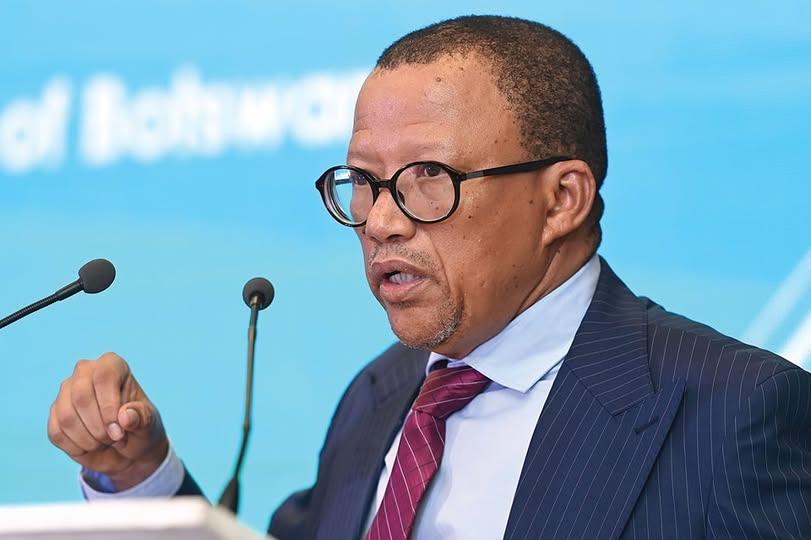
“The effectiveness of policy transmission (impact on economic activity) is also influenced significantly by the extent of use of the banking system and the financial sector generally. Thus, access to financial services, and cost of banking and financial services are important for policy transmission,” said Cornelius K Dekop, Govenor of the Bank of Botswana.
He said, “In this regard, the Bank continuously monitors the extent and level of banking charges and fees and their impact on access and use of banking services to promote economic activity, welfare and traction of economic transformation initiatives.”
According to officials, the Bank has implemented targeted liquidity support measures to address tight domestic liquidity conditions. These measures include longer-term repo operations, a pause in prime lending rate (PLR) increases and efforts to enhance foreign exchange market functioning.
These interventions are helping to stabilise market liquidity, as evidenced by increased uptake of longer-tenure instruments and more active interbank foreign exchange trading.
However, the structural drivers of the current liquidity pressures cannot be solved by monetary policy alone. The Bank continues to work closely with commercial banks to support liquidity management, orderly market functioning and financial system resilience.
“Therefore, going forward, to address potential financial stability risks and improve policy transmission, commercial banks with high deposit concentration could be required to hold additional capital as part of the transition to implementation of new supervisory requirements under Basel III,” said Dekop.
The adjustment of the exchange rate policy parameters in July 2025 helped stabilise foreign exchange reserves at around six months of import cover; anchored the Pula’s external value; increased foreign exchange interbank market activity from an average of P2.4 billion to about P3 billion per month and reduced official foreign exchange sales by the Bank of Botswana from approximately P4 billion to P2.8 billion per month, thus preserving them.
Botswana’s real gross domestic product (GDP) contracted by 3percent in the twelve months to June 2025, a sharper decline compared to the 0.6 percent contraction in the year to June 2024.
The weak performance was mainly due to the downturn in mining output and generally subdued non-mining activity.


